
Floor and Tiles · Documentation
Properties
Dimensions of the selected pattern. The rollout shows only the parameters of the current pattern.
Basic
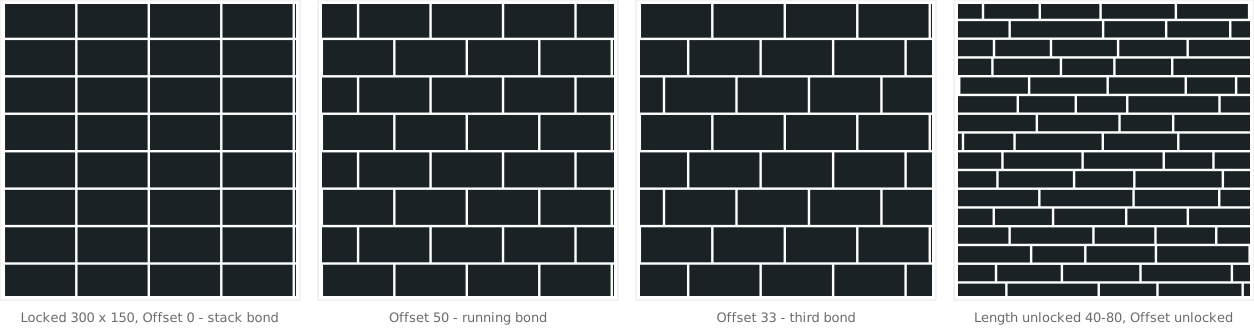
Rows of rectangles with optional random sizes.
| Parameter | Description |
|---|---|
| Length › Min / Max / Spread, padlock | Element length. Locked: all elements use Max. Unlocked: random between Min and Max; Spread 0 is uniform, higher values favour the average. |
| Width › Min / Max / Spread, padlock | Element width, as Length. Unlocked gives rows of random width. |
| Row Offset › Min / Max / Spread, padlock | Row stagger, as a percentage of the length. 50 running bond, 33 third bond, 0 stack bond. Unlocked: random per row. |
Herringbone
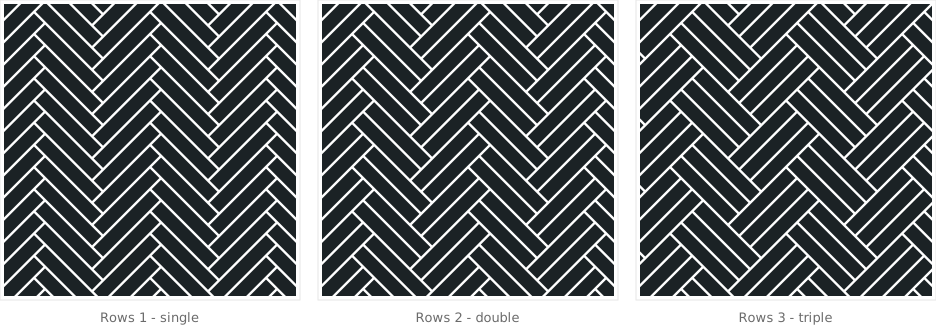
Planks at 90° in a zigzag.
| Parameter | Description |
|---|---|
| Rows | Planks per arm. 1 single, 2 double, 3 triple herringbone. |
| Length, Width | Plank size. The pattern closes without steps when Length is a whole multiple of Width. |
Chevron
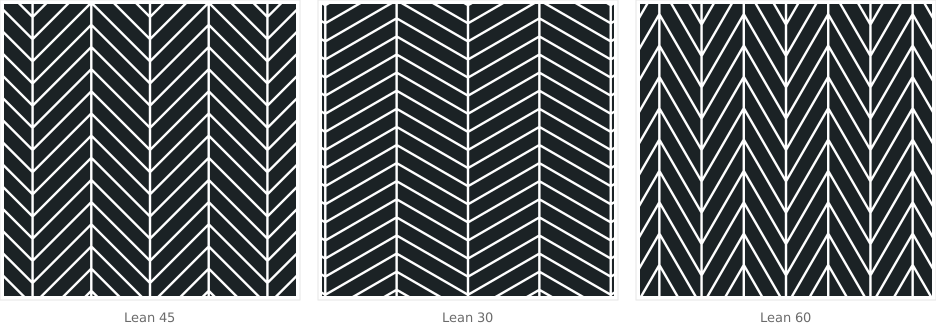
Planks with angled ends meeting on a straight seam.
| Parameter | Description |
|---|---|
| Lean | Angle of the planks to the seam, in degrees. |
| Length, Width | Plank size before the ends are cut. |
| Offset, Every | Row stagger. |
Block
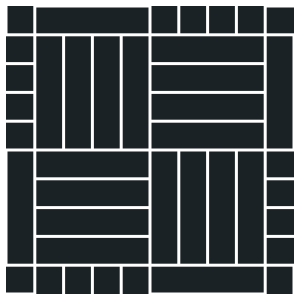
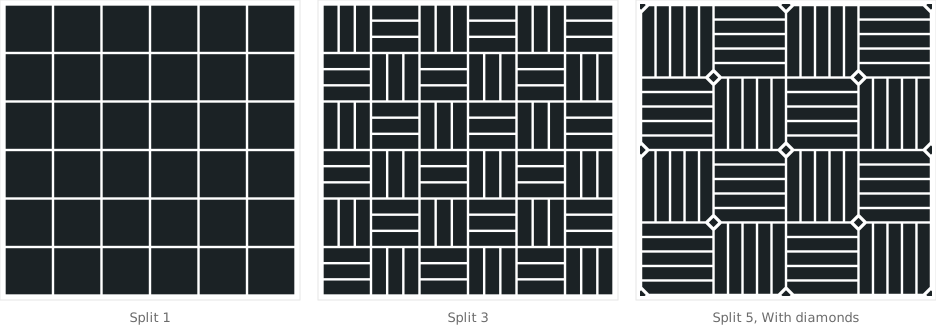
Square blocks of parallel planks, each turned 90° to its neighbours.
| Parameter | Description |
|---|---|
| Size | Block size. |
| Split | Planks per block. 1 gives plain squares. |
| With diamonds | Adds diamonds at the block corners. |
| Diamonds | Diamond at every Nth corner. |
| Diamond | Diamond size, point to point. |
Basket Weave
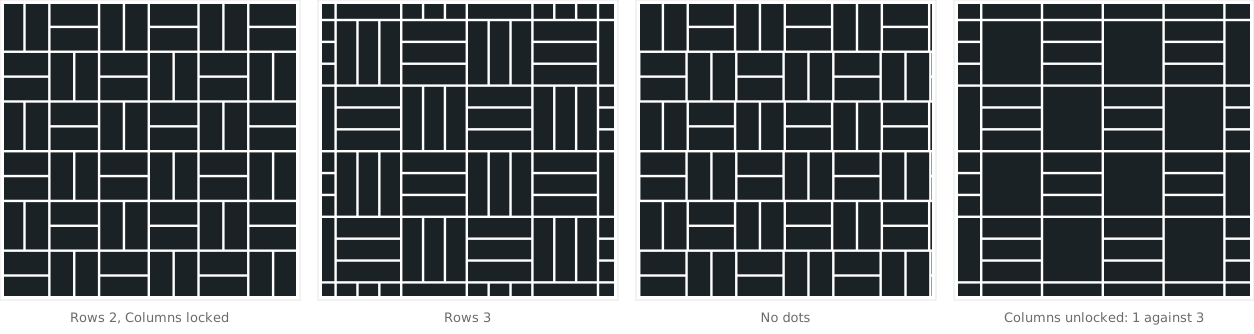
Groups of planks alternating direction.
| Parameter | Description |
|---|---|
| Rows | Planks in the lengthwise group. |
| Columns, padlock | Planks in the crosswise group. Locked: equal to Rows. |
| No dots | Closes the groups into continuous bands without the small squares. |
| Length › Board / Cross, padlock | Length of the lengthwise and crosswise planks. Locked: equal. Cross is disabled with No dots. |
| Width › Board / Cross, padlock | Width of the lengthwise and crosswise planks. |
Versailles
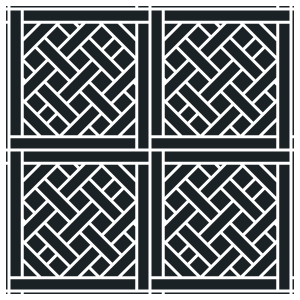
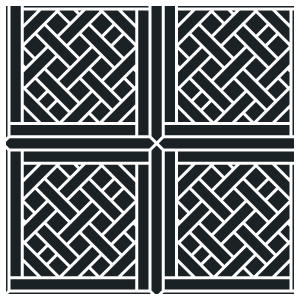
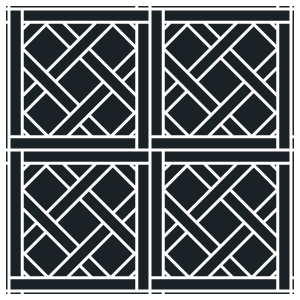
Square panels of woven boards around a centre square, laid on the diagonal. Internal sizes are derived from the panel.
| Parameter | Description |
|---|---|
| Variation (grid) | 1: panels butted. 2: a board between panels. 3: smaller panel module. |
| Panel | Panel size. |
| Board | Width of the woven boards. |
| Frame | Width of the frame boards. |
| Border | Width of the boards between panels (variation 2). |
| Padlock | Uses one width for Board, Frame and Border. |
| Offset, Every | Row stagger. Variations 1 and 3. |
Bordeaux
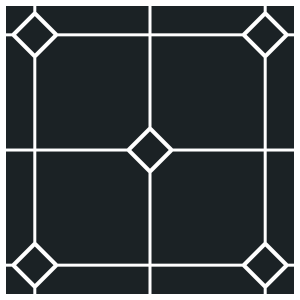
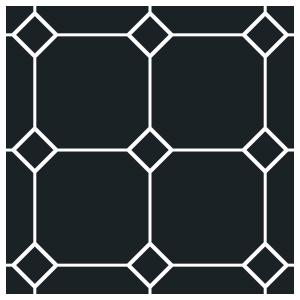
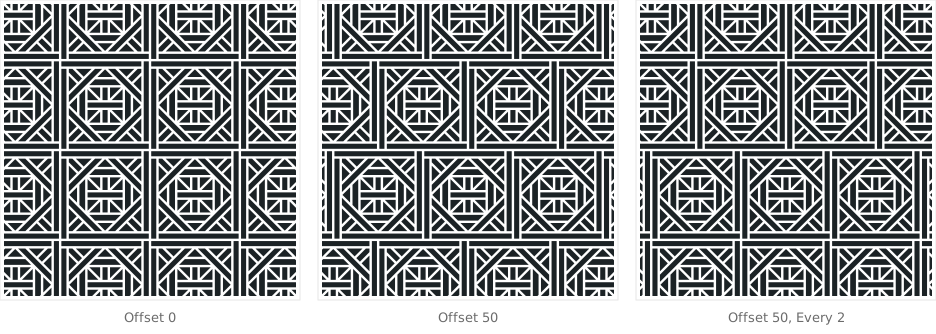
Squares and rectangles with a small square at each crossing.
| Parameter | Description |
|---|---|
| Size | Module size. Other pieces are proportional. |
| Offset, Every | Row stagger. |
Hexagonal
Regular or stretched hexagons.
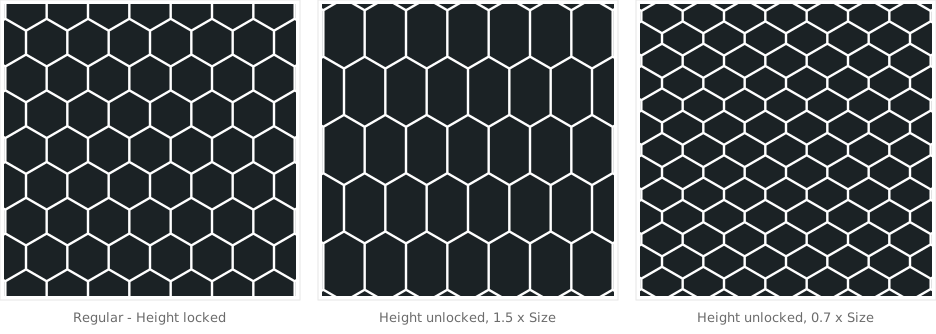
| Parameter | Description |
|---|---|
| Size | Width across flats. |
| Height | Width across points. Follows Size until unlocked. |
| Unlock | Allows Height to be edited. |
Diamond
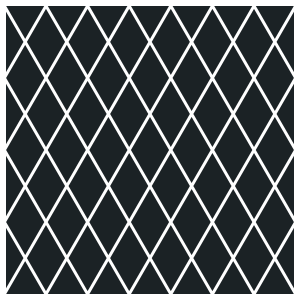
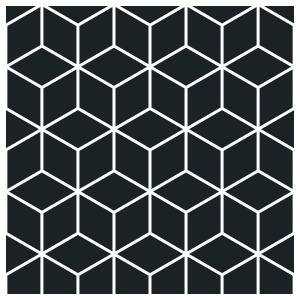
60°/120° rhombi.
| Parameter | Description |
|---|---|
| Variation (grid) | 1: rhombi in rows. 2: three orientations forming cubes; use three material IDs. |
| Size | Side length of the rhombus. |
Fish Scale
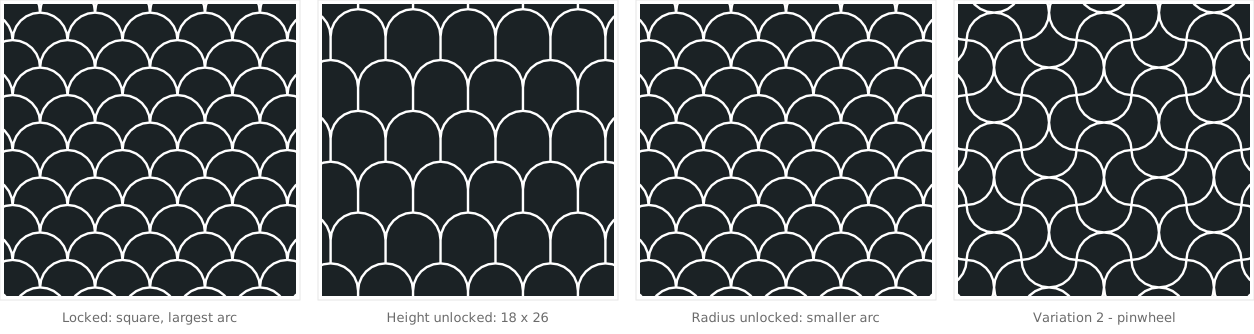
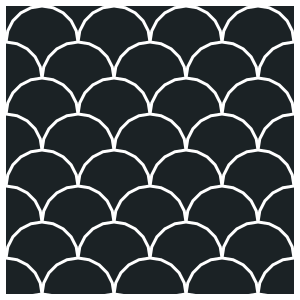
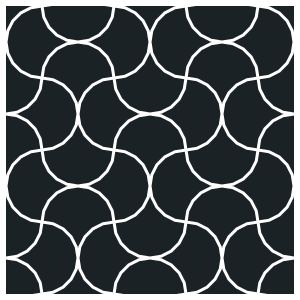
Overlapping scales. Flip in General reverses their direction.
| Parameter | Description |
|---|---|
| Width, Height, padlock | Scale size. Locked: square. |
| Radius, padlock | Arc radius. Locked: the largest radius without gaps. |
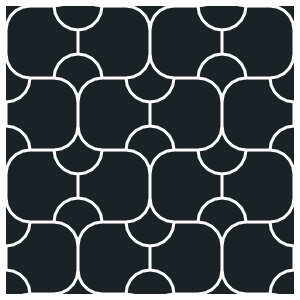
| Variation (grid) | 1: rows. 2: four scales around each point; requires a square scale and the locked radius. 3: a scale on every grid point, facing up and down by turns, with a large rounded square in every cell; sized by Width. Opened in a version before 1.4.5 it shows as variation 2. |
| Sides | Arc segments per full circle. Also sets the mesh density with Generate topology on. Default: 18. |
Monticello
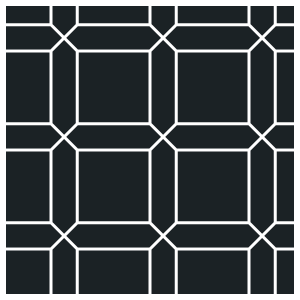
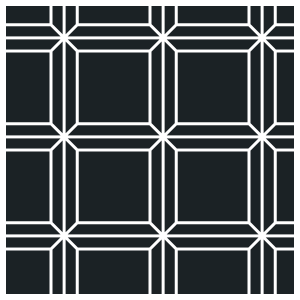
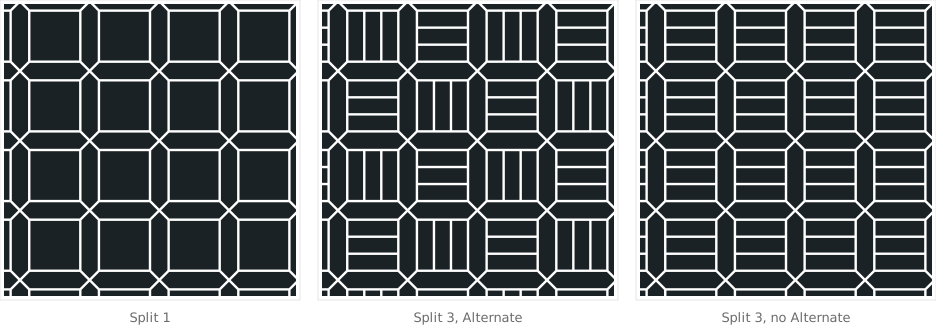
Squares with pickets between them.
| Parameter | Description |
|---|---|
| Variation (grid) | 1: one pointed picket at each crossing. 2: two mitred boards framing each square. |
| Square | Square size. |
| Picket | Picket width. |
| Split | Boards per square. 1 leaves it whole. |
| Alternate | Turns the split 90° on alternate squares. |
| Offset, Every | Row stagger. |
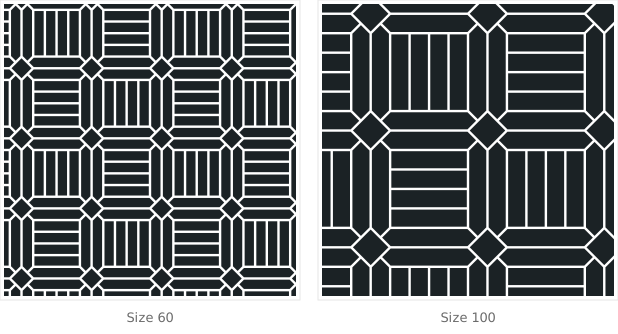
Camelot
Squares with small squares at the corners. Proportions are fixed.
| Parameter | Description |
|---|---|
| Size | Module size. |
Parquet Panels
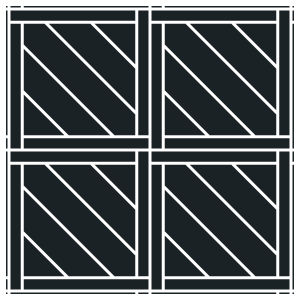
Framed square panels, each turned from the last.
| Parameter | Description |
|---|---|
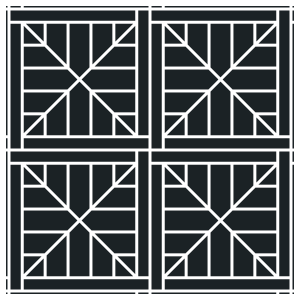
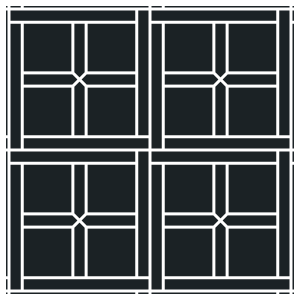
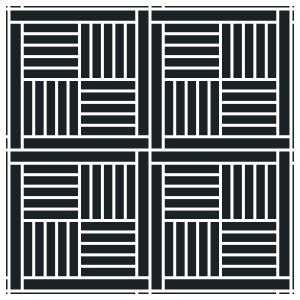
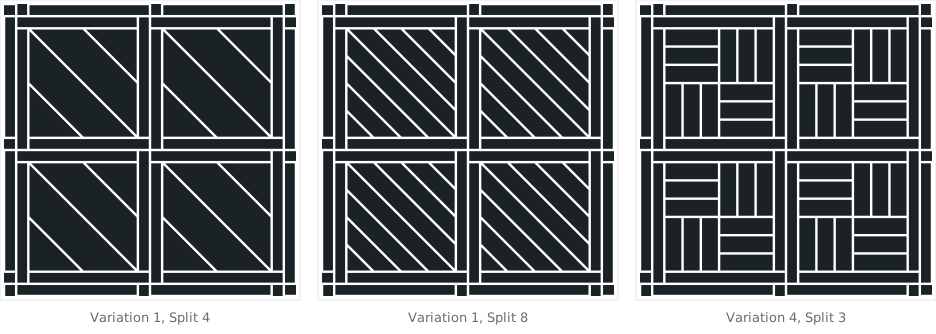
| Variation | Panel fill. 1: diagonal bands. 2: four triangles. 3: cross with banded squares. 4: four blocks of planks. |
| Size | Panel size. |
| Frame | Frame width. |
| Split | Divisions of the panel fill. |
Arabesque
Lantern-shaped tiles, point to point.
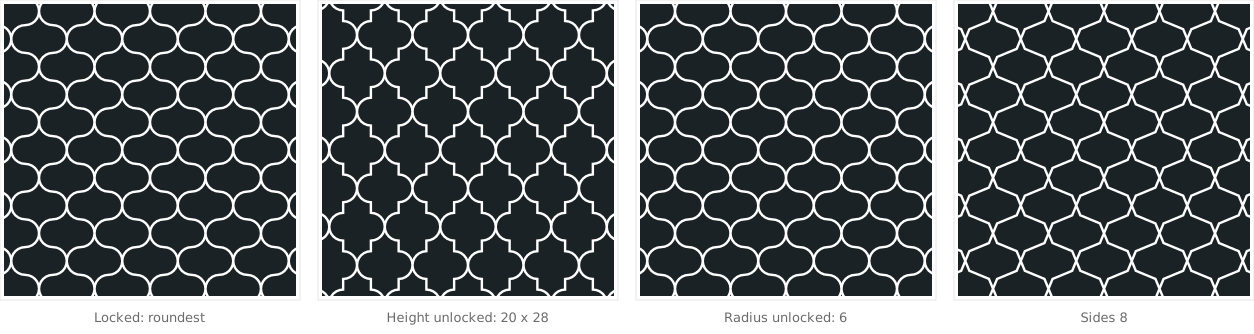
| Parameter | Description |
|---|---|
| Width, Height, padlock | Tile size. Locked: equal. |
| Radius, padlock | Arc radius. Locked: the roundest shape. Smaller values give straighter sides. |
| Sides | Arc segments per full circle. Default: 24. |
Penny Round
Round tiles in rows; the ground between them is left to the grout.
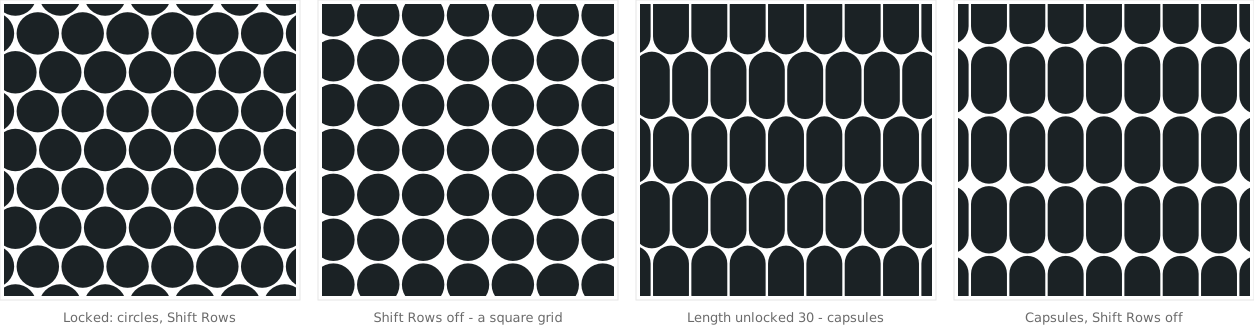
| Parameter | Description |
|---|---|
| Width, Length, padlock | Tile size. Locked: a circle. Unlocked, a longer Length makes a standing capsule. |
| Shift Rows | Slides rows into the hollows of the row below, or columns up (Slide). |
| Shift by | How far a slid row or column goes; half a tile nests them in the hollows, and the rows close up to match. |
| Every | Which rows are shifted: every other row, every third and so on. |
| Sides | Arc segments per full circle. Default: 24. |
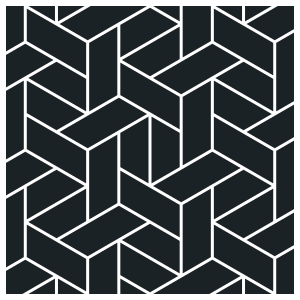
Hex Weave
Hexagons with three planks woven round each, three ways at once.
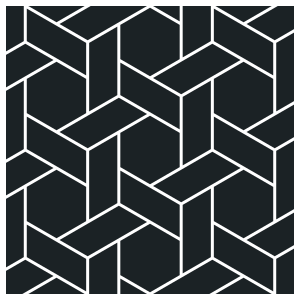
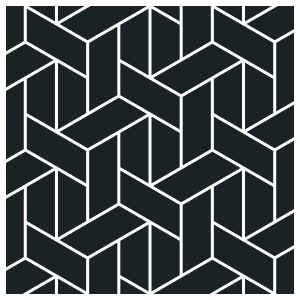
| Parameter | Description |
|---|---|
| Length | Plank length. |
| Variation (grid) | 1: whole hexagons. 2: hexagons cut in half corner to corner, all one way. 3: the cut turns from one hexagon to the next. |
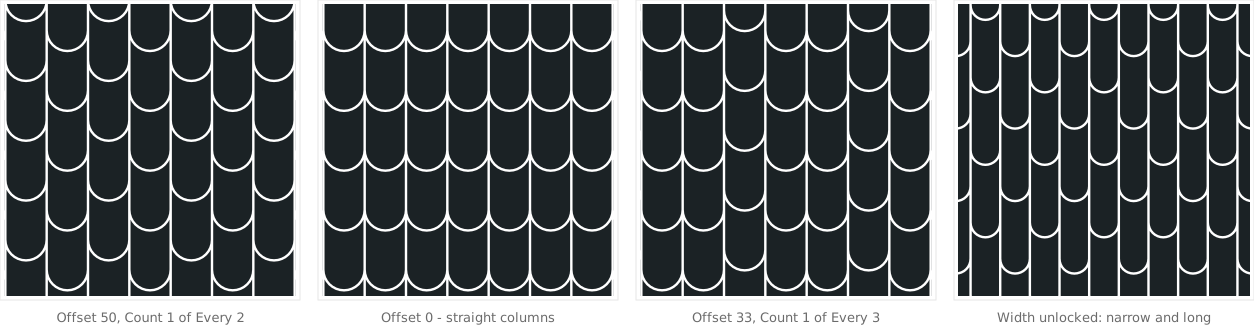
Shingles
Round-tongued shingles in columns, each tongue in the notch of the one below.
| Parameter | Description |
|---|---|
| Width, Length, padlock | Shingle size. Locked: the proportion of the reference shingle. |
| Offset | How far slid columns move up, as a percentage of a length. |
| Count, Every, padlock | Count columns slid out of every Every. Locked: Count is half of Every. |
Slid columns take their own material ID.
Pentagon
Two pentagons, large and small, fitted together.
| Parameter | Description |
|---|---|
| Size | The large pentagon, across. Large and small take IDs 1 and 2. |
Trapezoid
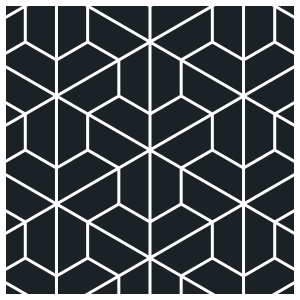
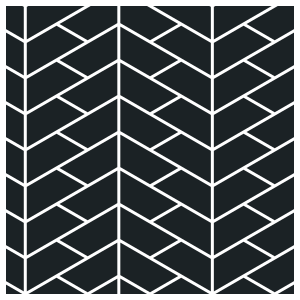
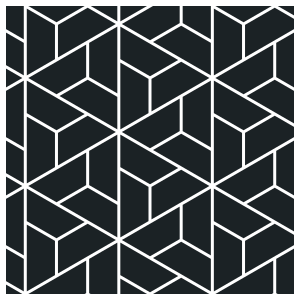
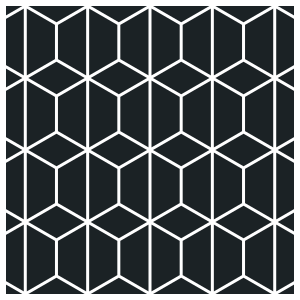
Half hexagons, laid four ways.
| Parameter | Description |
|---|---|
| Size | The long side. |
| Variation (grid) | 1 cubes, 2 herringbone, 3 pinwheels, 4 rows of hexagons with rhombi between. |
The halves take IDs 1 to 3 by the way their long side runs: give the three IDs three tones and the cubes stand up. Rhombi take 4.
Triangle
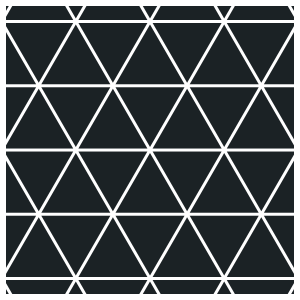
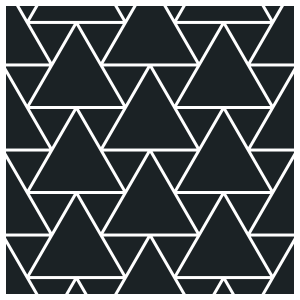
Equilateral triangles.
| Parameter | Description |
|---|---|
| Size | Side length. |
| Variation (grid) | 1: all alike, point up and point down (IDs 1 and 2). 2: large ones pointing up with two half their size pointing down between (IDs 1 and 2). |
Wave
Custom. A round tongue on top and a notch underneath, stacked in columns; every other column is turned over so the tongues sit in the hollows.
| Parameter | Description |
|---|---|
| Width, Height | Tile size. |
| Sides | Arc segments per full circle. Default: 24. |
Biscuits
Custom. Long tiles with round ends and two round bites along one side, four at a time turning round each other.
| Parameter | Description |
|---|---|
| Width | Tile width. The length is always four widths: that is what makes the pattern close. |
| Sides | Arc segments per full circle. Default: 24. |
Shippo
Custom. Overlapping circles, laid as the four-point stars inside them and the petals where two overlap.
| Parameter | Description |
|---|---|
| Size | The circles' diameter. |
| Sides | Arc segments per full circle. Default: 24. |
Clover
Custom. A hexagon whose sides are arcs, three out and three in, each lobe in the next tile's bite.
| Parameter | Description |
|---|---|
| Size | Across the corners. |
| Sides | Arc segments per full circle. Default: 24. |
Three material IDs, set so no two neighbours share one.
Corset
Custom. The Warsaw corset tile: a square on its corner whose sides are quarter circles, two bowed out and two bitten in, every other tile turned so each lobe sits in a neighbour's bite.
| Parameter | Description |
|---|---|
| Size | Across the corners. |
| Radius, padlock | Radius of the arcs. Locked: the size sets it, and the sides are quarter circles. Open: a larger radius gives flatter arcs. |
| Sides | Arc segments per full circle. Default: 24. |
Shared parameters
| Parameter | Description |
|---|---|
| Variation | Layout variant: Versailles, Monticello, Diamond, Parquet Panels, Fish Scale, Hex Weave, Trapezoid, Triangle. Each variation is a picture of its own in the pattern grid, picked like a pattern. Stored per pattern. |
| Offset | Shift of every second row, as a percentage of the element. 50 is a half bond. Bordeaux, Chevron, Monticello, Versailles 1 and 3. |
| Every | Number of rows per offset step. |
| Length, Width | Plank size. |
| Padlock | Links a value to another value or rule. Unlock to edit it. |