
Floor and Tiles · Documentation
Borders
Makes the row a band along the outline and sets how it is laid along the walls.
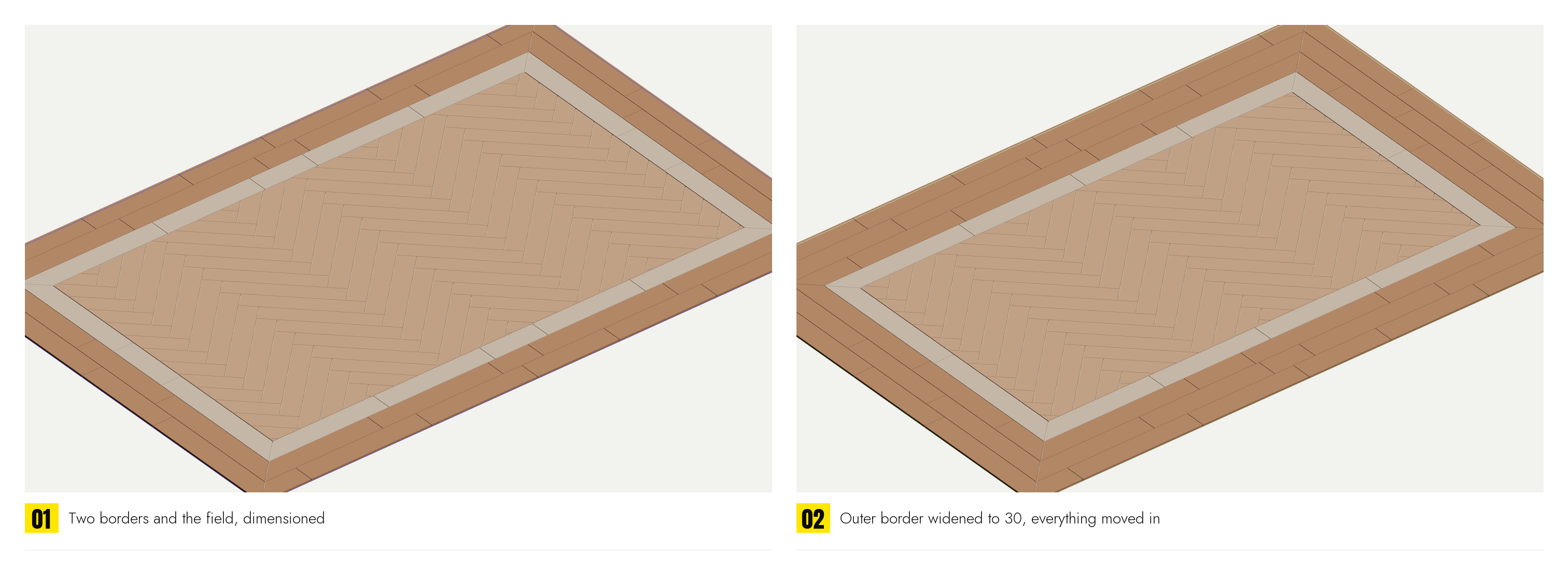
Bands are measured inward from the picked outline. Around a hole the band is measured outward from the hole.
Band
| Parameter | Description | Default |
|---|---|---|
| Band Width | Width of the band, in scene units. 0 fills the rest of the outline; this is the field. | 0 |
| Band Inset | Distance from the outline to the band. Disabled while Follow the outer border is on. | 0 |
| Follow the outer border | Starts the band where the next outer band ends, plus that band's grout. Bands and the field move when an outer band changes width. | on |
Runs
| Parameter | Description | Default |
|---|---|---|
| Lay along the outline | Splits the band into one run per side of the outline and lays each run along its side. Off, the band is laid from one pattern grid. | off |
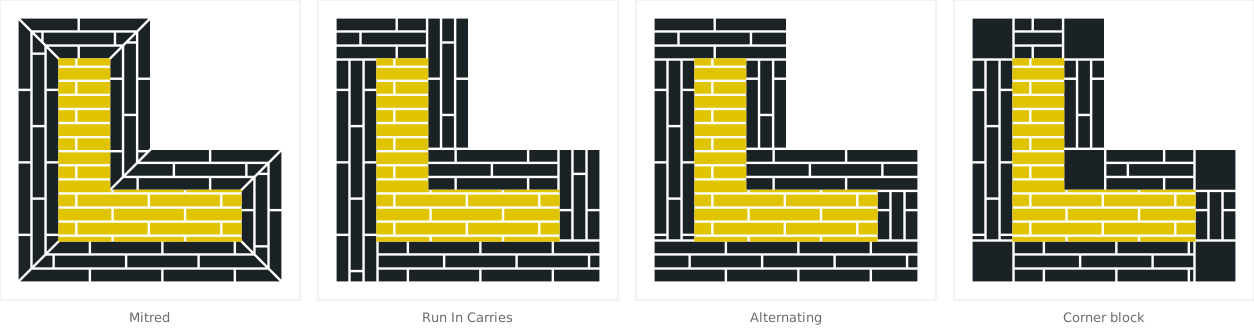
| Outer | Corner treatment where the outline turns outward. Mitred: split on the bisector. Run In Carries: the incoming run takes the corner. Run Out Carries: the outgoing run takes the corner. Alternating: alternates corner by corner. Corner block: a single square piece in the corner. | Mitred |
| Inner | The same for corners where the outline turns inward. | Mitred |
| Padlock | Uses the Outer setting for inner corners. Inner is disabled while locked. | locked |
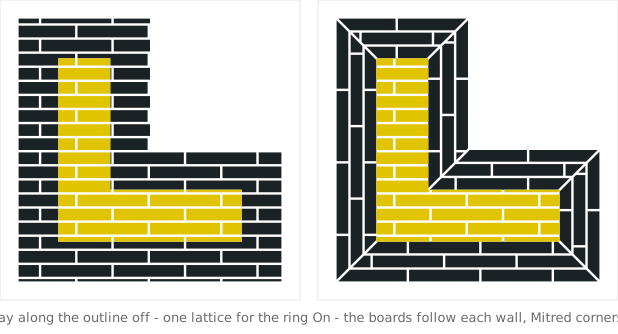
Runs meet with one joint of the row's Grout width.
Along each run
| Parameter | Description | Default |
|---|---|---|
| Trim elements to fit | Shortens all elements of a run equally so a whole number fits the side. Patterns without an element length scale the whole module. The joint is not changed. | off |
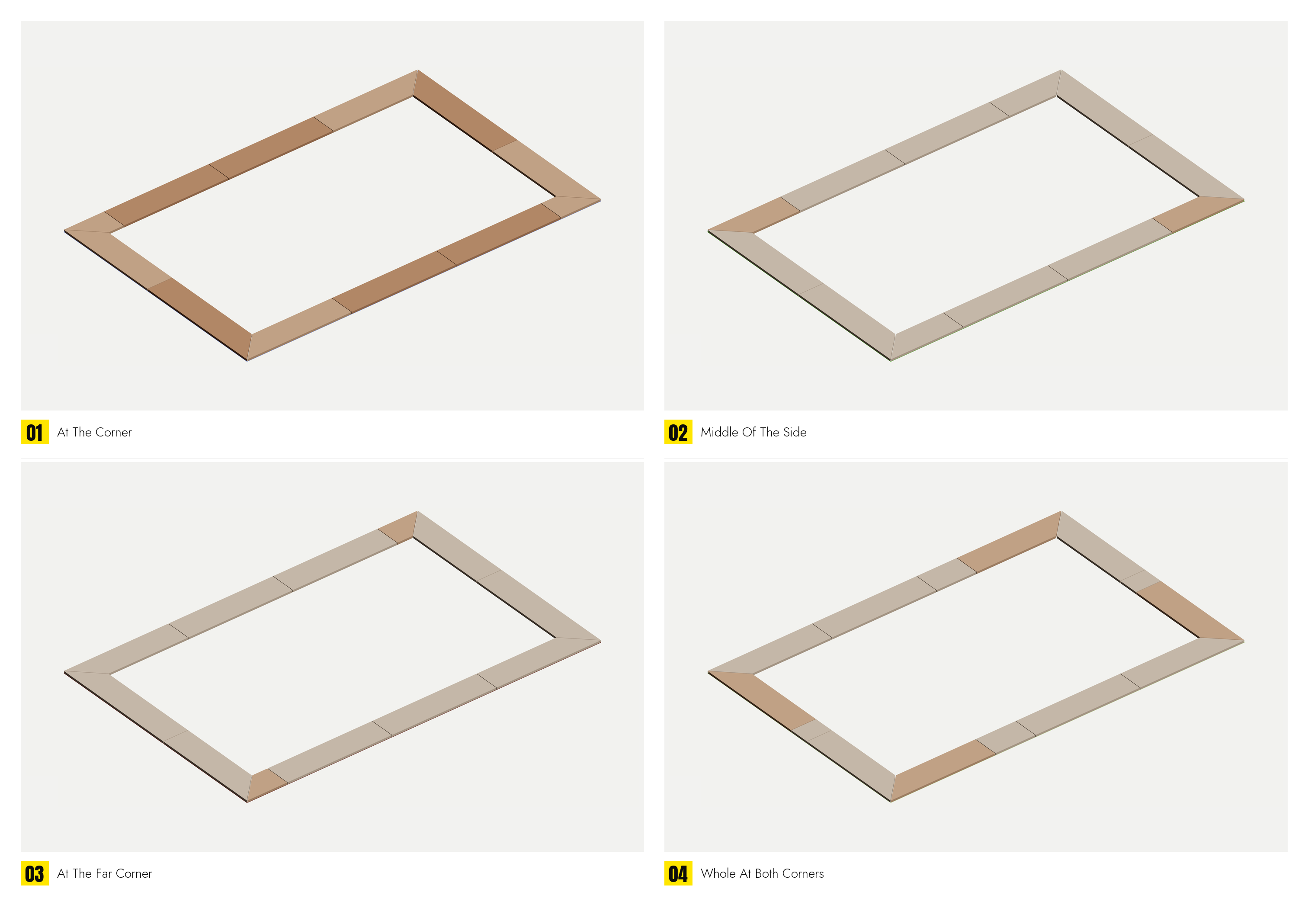
| Starts | Where the pattern starts on each side. At The Corner: whole element at the start. Middle Of The Side: centred, equal cuts at both ends. At The Far Corner: whole element at the end. Whole At Both Corners: whole elements at both corners, one cut in the middle. Disabled with Trim elements to fit. | Whole At Both Corners |
Free edition: borders require Pro.